The search for missing and forcibly disappeared persons is not only about establishing what happened. It is also about upholding families’ rights and dignity, ensuring their meaningful participation in the search for truth, and building institutions capable of delivering answers and accountability.
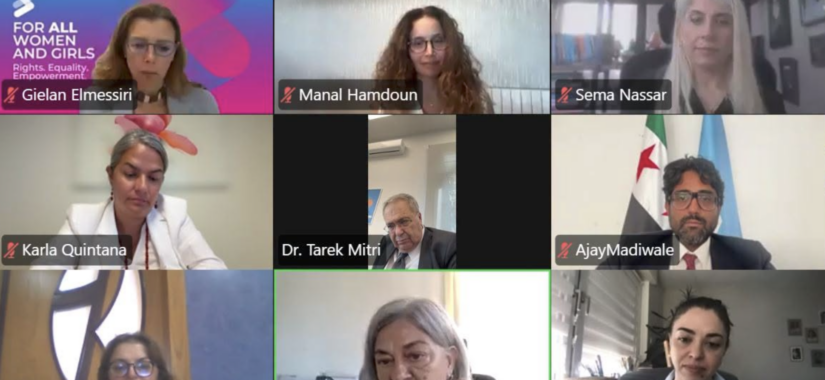
On September 7, 2026, Space for Cooperation in Syria, hosted by the Center for Civil Society and Democracy CCSD, and the Women’s Peacebuilders Network in Lebanon WPNL, hosted by UN Women Lebanon, co-organized an online regional dialogue on missing and forcibly disappeared persons in Lebanon and Syria.
The dialogue brought together more than 70 participants from Lebanon, Syria, and across the region, including representatives of national and international institutions, civil society organizations, human rights and peacebuilding practitioners, families of missing persons, researchers, and development partners.
Facilitated by Sima Nassar of Space for Cooperation in Syria and Manal Hamdoun of WPNL, the discussion explored how national institutions, civil society, families, and international actors can work together to advance the search for truth and strengthen support for those affected by disappearance.
Watch the recording here.
Women and Families Must Be Part of the Search for Truth
Families of missing and forcibly disappeared persons have long carried the burden of searching for answers, often while navigating uncertainty, administrative barriers, and limited access to information. Women, in particular, have played a central role in documenting cases, pursuing leads, supporting other families, and demanding accountability.
The dialogue underscored the importance of recognizing women not only as family members directly affected by disappearance, but also as actors whose knowledge and experience must inform decisions and policies. Their participation should extend beyond sharing personal testimonies to shaping the processes through which cases are investigated, information is handled, and families receive support.
Participants emphasized the need for approaches that respond to families’ realities and ensure their voices are heard throughout the search for truth. Meaningful participation requires accessible channels for engagement, clear communication, and institutional practices that treat families with dignity and respect.
Strengthening National Institutions and Cooperation Between Syria and Lebanon
The discussion highlighted the responsibilities of national institutions in addressing cases of missing and forcibly disappeared persons, responding to families’ needs, and helping establish the truth.
Dr. Mohammed Reda Jalkhi, Head of Syria’s National Commission for Missing Persons, and Dr. Tarek Mitri, Deputy Prime Minister of Lebanon, addressed the importance of institutional engagement and cooperation. Abir Abou Zaki Haidar, a member of Lebanon’s National Commission for the Missing and Forcibly Disappeared and the daughter of a missing person, brought the perspective of families directly affected by disappearance.
Drawing on Lebanon’s experience, Wadad Halawani, founder of the Committee of the Families of Kidnapped and Disappeared in Lebanon, reflected on the long-standing efforts of families, particularly women, to turn their individual experiences into a collective cause. Her contribution highlighted the importance of sustained advocacy, documentation, preserving collective memory, and ensuring that families continue to play a role after formal institutions and mechanisms are established.
Given the cross-border dimensions of many cases, cooperation between Syria and Lebanon is particularly important. Participants highlighted the need to strengthen communication, share relevant information, and coordinate efforts so that families are not left to navigate fragmented processes on their own.
During the dialogue, the two countries’ national commissions indicated their intention to sign a cooperation agreement. Such an agreement could provide a foundation for more coordinated work, while its practical value will depend on how cooperation is implemented and how it responds to families’ needs.
Coordinating National and International Efforts
The search for missing persons requires sustained cooperation across institutions and borders. No single institution can address the full scope of the challenge alone. National bodies, international mechanisms, civil society organizations, and families each have important roles to play.
Karla Quintana, UN Assistant Secretary-General and Head of the Independent Institution on Missing Persons in the Syrian Arab Republic (IIMP), highlighted the importance of coordination, information-sharing, technical expertise, and national ownership. International support can help strengthen institutional capacities and facilitate the exchange of knowledge, but efforts must remain connected to the needs and priorities of families.
Participants also stressed that coordination should create meaningful opportunities for women and families to contribute to decisions and processes affecting them. Their involvement is essential to ensuring that institutional responses are informed by lived experience and remain accountable to those seeking answers.
Priorities for Moving Forward
The dialogue pointed to several priorities for strengthening the search for missing and forcibly disappeared persons in Syria and Lebanon:
- Meaningful participation: Ensure that families, particularly women who have long led search efforts, can contribute to decision-making and the development of policies and mechanisms.
- Stronger institutional cooperation: Improve coordination between national institutions in Syria and Lebanon and strengthen collaboration with civil society and international actors.
- Access to information: Develop clear and secure channels through which families can report cases, seek information, follow up on developments, and communicate with relevant institutions.
- Institutional and technical capacity: Strengthen the expertise, resources, and coordination needed to document cases and advance search efforts, including through forensic and scientific capabilities.
- Family-centered support: Provide sustained psychological, legal, social, and economic support that responds to families’ circumstances, including the needs of women, children, refugees, displaced people, and families living far from service centers.
- Accountability and transitional justice: Connect the search for truth with legal reform, accountability, and guarantees of non-recurrence, while addressing the legal consequences of disappearance for families.
- Preserving knowledge and collective memory: Protect and document the records, testimonies, archives, and expertise accumulated by families and civil society organizations as essential resources for uncovering the truth and advancing justice.
The Search for the Missing and Syria’s Future
Addressing the fate of missing and forcibly disappeared persons is fundamental to building a future grounded in justice, dignity, and the rule of law. How institutions respond to families’ demands for truth will shape confidence in those institutions and influence the broader process of transitional justice.
The dialogue reinforced that families must not be left to carry the search alone. Their experiences, priorities, and demands for answers should inform the work of national institutions and international mechanisms, while cooperation across Syria and Lebanon must translate into practical progress.
A credible path toward truth requires more than institutional commitments. It requires sustained engagement with families, meaningful opportunities for participation, and a shared commitment to ensuring that the search for the missing remains central to justice and accountability.
Further Reflections on the Challenges Facing Families of Missing Persons
In addition to her contribution to the dialogue, Noura Burhan shared further reflections on the challenges faced by families of missing persons. These reflections broaden the discussion by highlighting the lasting effects of disappearance on families and the need for a response that addresses their rights and needs over time.
The absence of answers about a loved one’s fate can leave families in a state of uncertainty and prolonged waiting, sometimes for years, while they continue to manage everyday responsibilities and cope with the consequences of disappearance. The toll extends beyond psychological distress to include social and practical challenges that place additional burdens on families and can make it harder for them to meet their needs. This underscores the importance of sustained psychosocial support that is accessible, confidential, and responsive to families’ circumstances.
Burhan also drew attention to the impact of public and media discourse on families of the missing. Ridiculing their suffering or exploiting their cases to fuel polarization and division can deepen their distress and undermine their dignity. The issue must therefore be addressed with care and respect, without political exploitation or the dismissal of families’ suffering as they continue to seek answers about their loved ones.
These reflections reinforce the need for responses that go beyond gathering information and establishing the truth. They must also address the lasting consequences of disappearance, uphold families’ rights and dignity, and ensure that support remains available throughout their search for answers. Supporting families is not secondary to the pursuit of justice; it is an integral part of it.